
These Are The Differences Synthetic And Simulant Diamonds
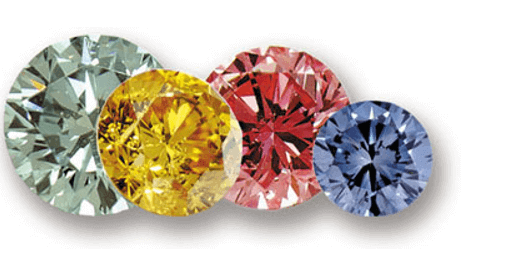
In 2003, Wired writer Joshua Davis hailed the beginning of the lab-grown diamond revolution. Man-made gems, he proclaimed, would be available for as little as $5 a carat. The problem was there weren’t many lab-grown diamonds out there—and 10 years later, there still aren’t. And those that are available sell for a lot more than $5 a carat.
Around that time, products labeled “synthetic diamonds” started popping up on eBay. But they weren’t synthetic anything; rather, they were very obviously cubic zirconia, a simulant. And while many consumers confuse “diamond simulants” with “synthetic diamonds,” there is a clear gemological difference.
Diamond simulants—which include cubic zirconia, or CZ, moissanite, and YAG—may look like a diamond, but have nothing in common with a diamond chemically. They generally sell for very low cost. Synthetic diamonds, however, are diamonds—they are chemically, visually, and physically identical to the diamonds everyone knows, but for the fact they were grown in a lab as opposed to in nature. And while they are cheaper than mined products, their prices are comparable: For example, Gemesis Diamond Co. sells its lab-created diamonds for about 20 percent less than the prices of naturals.
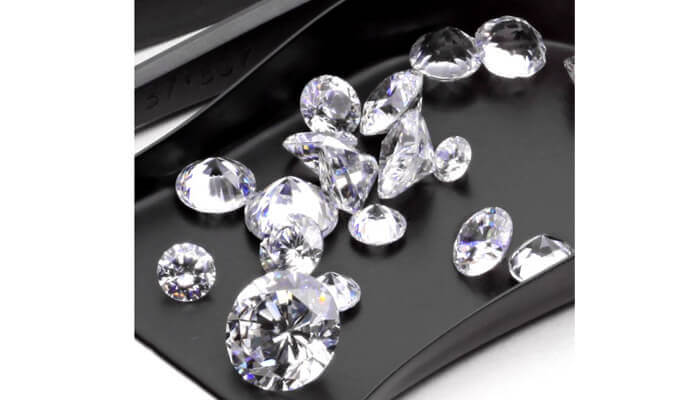
But this isn’t just a gemological distinction; it’s also a legal one. The Federal Trade Commission’sJewelry Guides say it is unfair and deceptive “to use the words laboratory-grown, laboratory-created, [manufacturer name]-created, orsynthetic with the name of any natural stone to describe any industry product unless such industry product has essentially the same optical, physical, and chemical properties as the stone named.” While it could be argued that some simulants have similar optical properties, chemically and physically they are not the same.
Still, possibly because the words sound alike and have sometimes cloudy meanings, many consumers think thatsimulant diamonds and synthetic diamonds are the same thing—which is, at least in part, why some lab-grown diamond manufacturers so strenuously object to the wordsynthetic to describe their stones.
“Moissanite and cubic zirconia…are frequently advertised as ‘synthetic diamonds,’ ” said Gemesis president Suraj Mehta in a submission to the FTC. He adds that, in spite of eBay having decreed in 2007 that simulants must be accurately described, there are “hundreds of ‘synthetic diamond’ products offered for sale on eBay and Amazon, the vast majority of which are -moissanite or cubic zirconia.”
And needless to say, this is an issue on the rest of the Internet as well.
[to follow my future posts on Twitter please click here]
The biggest online seller of simulants today is Diamond Nexus (formerly Diamond Nexus Labs), which now regularly places on Internet Retailer’s Top 500 e-tailers list. (Last year, it ranked 334th.) The company was named official jeweler and crown maker of the Miss Universe Organization in 2009, and was voted a “Best of Weddings Jeweler” on TheKnot.com three years running. The company has opened a retail store in suburban Chicago and is planning a new “retail concept” that will serve as more of an “experience center” than a traditional store, says marketing director Kyle Blades.
The Franklin, Wis.–based company—co-owned by Casper, Wyo.–based Lautrec Corp. and Hong Kong’s H.C.A.E. Industries Ltd.—does a canny job of reaching out to customers who have negative views of the traditional diamond industry; its site repeatedly bills its products as conflict-free and ecologically friendly, as opposed to mined diamonds. (Lab-grown diamond companies typically make similar claims for their products.)